Tianning Temple
China’s one of the largest Buddhist temples, first built in the Tang Dynasty (618–907 AD) and rebuilt multiple times;
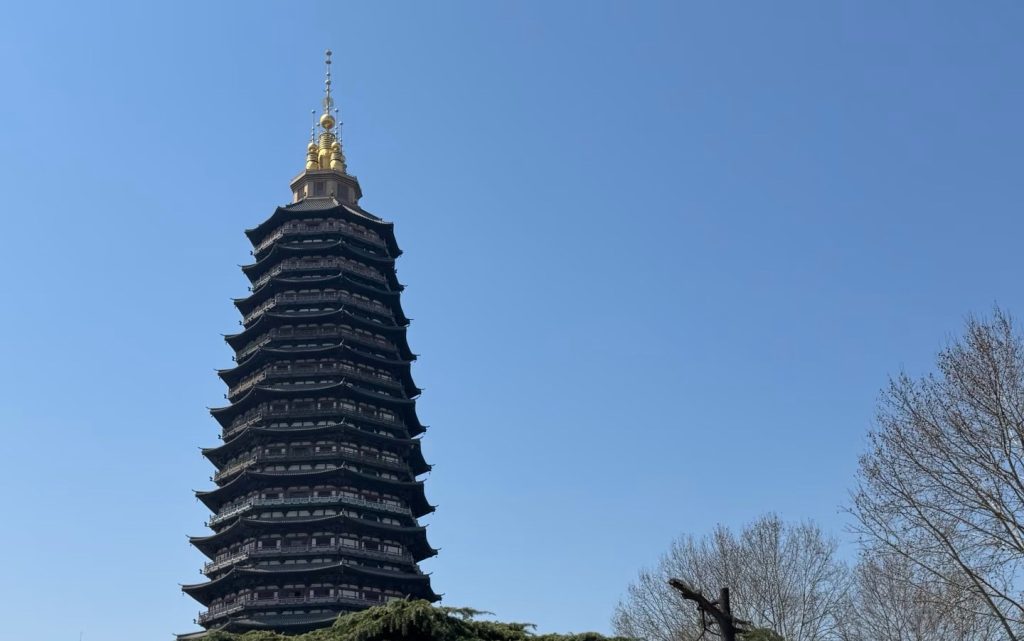
Home to the Tianning Pagoda (153.79m tall), one of the world’s tallest Buddhist pagodas, adorned with 10,000 gilded Buddha statues and traditional wooden craftsmanship.
Yancheng Ruins
A 3,000-year-old pre-Qin (c. 2100–221 BC) city site, unique for its “three cities and three moats” structure (the only well-preserved site of this kind globally);
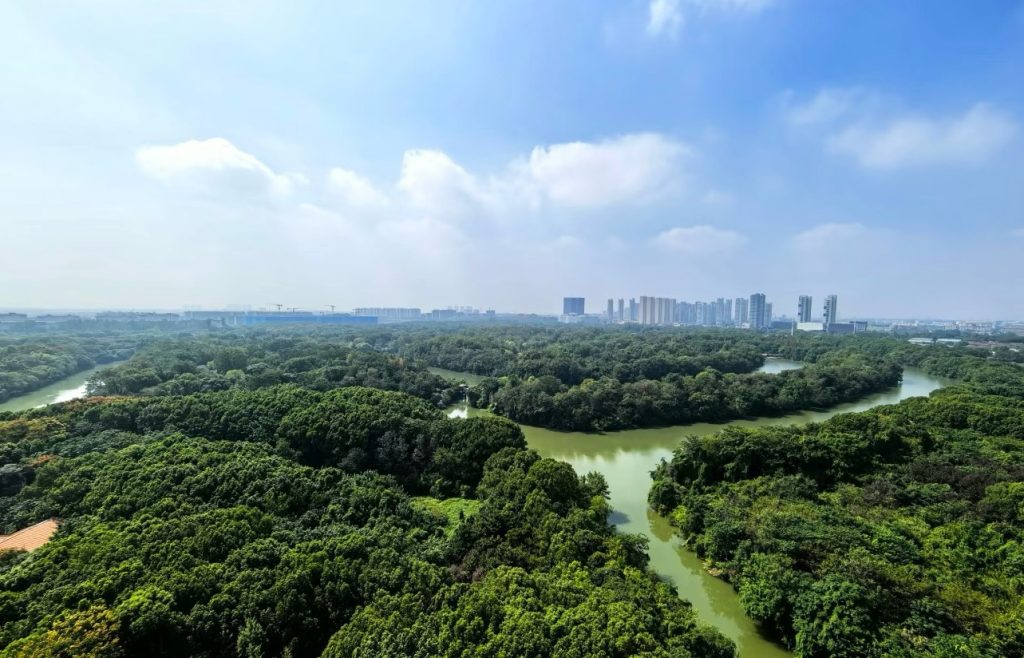
Once a military stronghold, now a heritage park showcasing bronze artifacts and ancient city planning.
Changzhou’s ancient architectural legacy is a layered tapestry woven across millennia, where two landmarks—Tianning Temple and Yancheng Ruins—stand as twin pillars of the city’s historical identity, each bearing witness to distinct eras yet bound by a shared reverence for heritage. First settled in the Tang Dynasty (618–907 AD) and expanded over the Song, Ming, and Qing dynasties, Tianning Temple earned its title as “the First Jungle of the Southeast” (a term for prominent Buddhist monasteries) not just for its scale, but for its fusion of imperial grandeur and regional craftsmanship: its main hall, restored in the late 20th century, retains the Song Dynasty’s “dougong” (interlocking wooden bracket) structure, where curved beams and carved brackets distribute weight without nails, a feat of ancient engineering that has withstood earthquakes and fires for centuries. At its heart rises the Tianning Pagoda, a 153.79-meter behemoth completed in 2007 to honor the temple’s millennial legacy—clad in 65 tons of bronze, adorned with 10,000 gilded Buddha statues (each cast with a unique expression), and strung with 1500 bronze bells that chime with the wind, echoing the temple’s role as a spiritual anchor for locals and pilgrims alike. Its underground palace, sealed at its inauguration, houses relics of the Buddha and ancient Buddhist scriptures, linking the temple’s modern restoration to its Tang Dynasty roots.
A short drive from the temple lies the Yancheng Ruins, a site that plunges visitors 3,000 years back to the pre-Qin era (c. 2100–221 BC)—a time when Changzhou was a strategic stronghold of the Wu Kingdom. What sets Yancheng apart is its unparalleled “three cities and three moats” layout: three concentric earthen walls (each 1–3 meters tall) encircle three nested moats, a design unique in global archaeological records, crafted to repel invaders while channeling water for daily life. Excavations here have unearthed over 1,000 artifacts, including a 11-meter-long 独木舟 (dugout canoe) carved from a single camphor tree (the oldest preserved watercraft in China), bronze swords with intact blades, and pottery vessels etched with early Wu script—remnants of a society that balanced military rigor with artistic refinement. Unlike the temple’s ornate grandeur, Yancheng’s charm lies in its understated earthiness: the grass-covered walls blend into the surrounding wetlands, and the quiet of the site lets visitors imagine the clatter of ancient markets, the call of soldiers on patrol, and the rituals of a civilization that laid the groundwork for Changzhou’s future. Together, Tianning Temple and Yancheng Ruins frame Changzhou’s story: one of spiritual endurance, the other of ancient ingenuity, both preserved to let modern audiences touch the pulse of a city that has evolved without forgetting its past.
